Two western hostages held for more than three years by Taliban forces in Afghanistan were freed today in south-eastern Zabul province in exchange for three Taliban commanders held by the Kabul government, an Afghan official tells NPR's Diaa Hadid. The official requested anonymity because he is not authorized to speak to the news media.
The Taliban has issued a statement saying they released 10 Afghan soldiers along with the two hostages. The group called the prisoner exchange "a step forward in good-will and confidence building measures" that could help the peace process.
Kevin King, an American, and Timothy Weeks, an Australian, were abducted at gunpoint from a car in 2016 just outside the walls of the American University of Afghanistan, in Kabul. Both worked as teachers at the university.
Last week Afghan President Ashraf Ghani said his government would release three prominent Taliban figures in a deal securing the freedom of King and Weeks.
In an address broadcast on state television, Ghani said he had granted the "conditional release" of three members of the Haqqani network, which is linked to the Taliban.
"We have decided to release these three Taliban prisoners who were arrested outside of Afghanistan," Ghani said, in order "to facilitate direct peace negotiations," The Associated Press reported.
The Taliban figures that were released are Anas Haqqani, Haji Mali Khan and Hafiz Rashid.
Anas Haqqani is the younger brother of the Taliban's deputy leader. He is also the son of the founder of the Haqqani Network, a Sunni Islamist militant organization that's responsible for some of the highest-profile attacks in the Afghan war, including assaults on the Kabul Intercontinental Hotel and the Indian Embassy in Kabul.
He has been in Afghan custody since 2014, when he was arrested in Bahrain, the AP reports.
A Taliban official said the three prisoners were flown to Qatar Tuesday, where the Taliban maintains a political office. The release of King and Weeks was apparently held up until the Taliban confirmed its prisoners had been turned over to its representatives in Qatar.
"Today, the United States welcomes the release of Professors Kevin King and Timothy Weeks," Secretary of State Mike Pompeo said in a statement hours after the release. "Both men were successfully recovered this morning, are in the care of the U.S. military, and will soon be reunited with their loved ones."
While saying that the U.S. "condemns the taking of innocent civilians as hostages," Pompeo also added that the U.S. "welcomes" the Taliban's goodwill gesture.
The American University of Afghanistan said in a statement last week that it was "encouraged to hear reports of the possible release of our two colleagues .... While AUAF is not part of these discussions, we continue to urge the immediate and safe return of our faculty members who have been held in captivity, away from their friends and families, for more than three years."
U.S. Ambassador to Afghanistan John Bass also said last week the U.S. "strongly supported" the release of the three Haqqani commanders, according to Afghan news site TOLOnews.
"This is the latest in a series of courageous steps that President Ghani and the Afghan government have taken to respond to the Afghan people's overwhelming desire for peace," Bass told TOLOnews.
The Taliban released two videos of the hostages in 2017, including one that showed the captives looking sickly, though they appeared healthier in the later video, the AP reports.
A separate attack by the Taliban on the American University in 2016 killed at least seven students and six guards.
President Trump has made a priority of getting American hostages released, and has secured the freedom of about 10 hostages held abroad.
More: https://whro.org/news/5171-taliban-release-american-and-australian-hostages-in-exchange-for-3-militants Written by Laurel Wamsley
Pray: for these continued efforts to warm relations between the parties in Afghanistan and abroad to lead to positive and constructive peace talks.
Pray: for the people of Afghanistan who yearn for a peaceful and safe country.
Videos reveal crackdown regime tried to hide from world… One video filmed through a doorway appears to show a woman looking at a teenage boy lying in a pool of blood on a pavement, as a riot policeman swings a baton at people running past him.
Another from the southern city of Shiraz shows a crowd trying to help a motionless man on the ground, as other people retreat along a smoke-filled street amid the sounds of shouting, screaming and gunfire.
In a third. taken from inside a moving car in the capital, Tehran, a woman can be heard screaming as plainclothes security personnel or militiamen detain a man.
It was the fear of such footage reaching the outside world that prompted the authorities in Iran to shut down access to the internet for more than eight days earlier this month, as protests against a sharp rise in the price of petrol spread across the country.
Now the internet has been partially restored, videos have been appearing on social media that paint a picture of a government crackdown more brutal and bloodier than many had feared. The identities and stories of the protesters who lost their lives have also emerged.
The Iranian authorities have not released any official figures about casualties, but Amnesty International has received what it considers credible reports that at least 143 protesters were killed after the protests erupted on 15 November.
The human rights group says the deaths resulted almost entirely from the intentional use of firearms by the security forces - though one man was reported to have died after inhaling tear gas and another after being beaten. Amnesty believes the death toll is significantly higher, and activists and official sources inside Iran have told BBC Persian that it exceeds 200.
However, the videos filmed by Iranians on their smartphones - many of them graphic and difficult to watch - have cast doubt on the government's claims. The footage appears to show security personnel and members of the paramilitary Basij force, which is frequently used to help suppress dissent, beating up unarmed protesters in the streets and firing live round into crowds at close range.
Sources inside Iran have told BBC Persian that the number of detainees is in the thousands. Despite the assertion by the Supreme Leader Ayatollah Ali Khamenei that the protesters had "roots outside of the country", the Ministry of Intelligence told parliament that most of those held were unemployed youths from poor families.
Journalists based in Iran were limited in their ability to report on the protests or were too afraid to do so, and those based elsewhere were hampered by the internet shutdown. But BBC Persian, which is banned from Iran, was able to get in touch by telephone and other means with citizen journalists, activists and other trusted sources on the ground. Their videos showed the protesters targeting symbols of the government, the clerical establishment and the security forces, as well as banks and petrol stations.
The epicentres of the protests were predominantly Kurdish towns on the western border with Iraq, as well as areas on the outskirts of major cities like Tehran, Karaj and Shiraz. All are places with among the highest levels of unemployment in the country.
“The price of petrol is rising, we are poorer,” protesters in Shiraz chanted in one video.
“The supreme leader lives like a God. We, the people live like beggars,” said people in Malard, near Tehran in another.
“No to Gaza, no to Lebanon. We sacrifice our lives for Iran” was a chant heard in Isfahan.
Clearly, there is disquiet about Iran’s activities in the Middle East. The Islamic Revolution Guard Corps (IRGC) has spent billions of dollars arming, training and paying militias in the region, saying that if the force does not fight Iran’s enemies beyond its borders then it will have to face them on the streets of Tehran.
But the protesters in the streets believe the money should have been invested in their country and their future.
US sanctions reinstated by President Donald Trump last year when he abandoned a nuclear deal with Iran have targeted the country’s oil and banking sectors. The sanctions, combined with corruption and mismanagement, have pushed the Iranian economy to the brink of collapse. But the crisis has not persuaded the government to change its policies.
Victims’ stories
State media and newspapers close to the security forces depicted the protesters as hooligans, who they said were seeking to loot and vandalise public property.
But the stories BBC Persian has heard from the families of those killed paint a different picture.
Fatima, a 40-year-old mother of two, was one of the demonstrators killed near Tehran.
Her family said she went out to protest against unemployment and inflation.
Another victim was Armin Qaderi, a 10-year-old boy, from Kermanshah. He died after going out to buy bread, according to his family.
Many families told BBC Persian that their relatives went out to express their anger at the economic crisis but that the authorities answered them with bullets.
More at: https://www.bbc.co.uk/news/world-middle-east-50562584
Pray: for the government of Iran to review its international policies and to listen to the concerns of its people.
Pray: for the heavy-handed violence and indiscriminate shooting of peaceful protestors by Government forces to stop.
Pray: for millions of Iranians whose livelihoods have been adversely affected by the economic sanctions and corruption that a positive breakthrough will happen soon.
Pray: that the voice of the Iranian people will be heard and these protests will not be in vain.
Egyptian TV News Report Alleges Turkey Supplying Weapons to Nigeria's Boko Haram.
Raymond Ibrahim, a Shillman Fellow in Journalism at the David Horowitz Freedom Center, and an expert on the Middle East and Islam, appeared on Thursday's afternoon's edition of CBN's Newswatch to talk more about Turkey's alleged ties to Islamic terrorism. Newswatch is seen weekdays on the CBN News Channel. For a programming schedule, click here.
Turkey is clearly a terrorist state with a broad reach, according to an Egyptian television news program. Ten.tv reports Turkey is supplying weapons to Boko Haram in Nigeria. Ten.tv host Nasha't al-Deyhi reported on a leak confirming an intercepted phone call from a few years back – confirming the action.
He reported in part: "Today's leak confirms without a doubt that Erdogan, his state, his government, and his party are transferring weapons from Turkey to – this is a shock, to where you may ask – to Nigeria; and to whom? – to the Boko Haram organization."
Raymond Ibrahim is the Shillman Fellow in Journalism at the David Horowitz Freedom Center and an expert on the Middle East and Islam. During an interview Thursday on CBN's Newswatch, Ibrahim said he's not surprised by the Ten.tv report.
"The tape was made in 2014 or 15 and it was reported widely in certain areas, in the US and the west not so much and not much came out of it," Ibrahim said. "The reason I think is that (Turkish President Recep Tayyip) Erdogan didn't have his fingers so much in Islamist politics outside of his own nation."
"But now that we've seen Abu Bakr al-Baghdadi, the ISIS Islamic state caliph that was killed recently, and he was found just three miles from the Turkish border, which is, in fact, the last bastion of jihadi-so-called 'freedom fighters' attacking the Syrian government," he told CBN News.
"It has brought it up again, he (Erdogan) is supporting ISIS," Ibrahim noted. "Now we're remembering and that was I think the point of the Egyptian show, we're bringing back to see that there's some continuity here. He's involved with some of the worst Islamic terror groups. If you remember, Boko Haram, whose name loosely means 'western education is forbidden', (Haram) was basically doing what ISIS was doing and is notorious for – years before ISIS was doing it.
"One of the things international observers have been noticing, especially increasingly, is that their armaments, their weapons are very sophisticated," he continued. "It's even spilled into the Fulani tribesmen in Nigeria and other parts of Africa. For example, in Burkina Faso, also in western Africa the attacks on Christians have become horrific in just the last few months."
As CBN News reported, a senior State Department official said last week that Turkey is backing forces in Syria who have the same radical ideology as ISIS.
"The problem is that the people doing the fighting are these ill-disciplined Arab militias, some of whom we've worked within the past when we were arming the opposition, but many of whom are (a) ill-disciplined, and (b) relatively radical, and their ideology is essentially Islamic ideology," the official said.
A fragile government in northern Syria called the Democratic Autonomous Administration of North and East Syria (DAA) released a statement on Tuesday saying that Erdogan seeks to subjugate them through radical Islam.
"Erdogan plans to turn our free, democratic region back into turmoil under radical Islamic occupation," the government said.
Critics of Erdogan's invasion say he is trying to revive the Ottoman Empire and establish a new caliphate. "Their open intention is to restore the original caliphate which was disbanded in 1924," said Dalton Thomas of Frontier Alliance International.
Recently Turkey's defense minister posted a map to his social media that shows portions of Greece, Syria, and Iraq as part of a greater Turkey.
Defense Minister Hulusi Akar posted a message alongside the map: "We have no eyes on anyone's soil. We will only take what's ours."
The map reflects the 1920 Ottoman National Pact that includes lands Turkey believes it deserved at the end of World War I.
Pray: that Turkey stops arming Boko Haram and other radical Islamic groups.
Pray: for the divine protection of Christians in the most vulnerable regions of Nigeria.
Pray: that any subversive intentions by Turkey’s government will be brought into the light.
Pray: that Nigeria and neighbouring governments will successfully redouble their efforts to disarm Boko Haram, the Fulani Herdsmen and the other Islamic terrorist groups.
Many geopolitical media watchers and prayer warriors believe the growing wave of anti-government protests ravaging the streets of Ecuador, Chile, Bolivia and Colombia hasn’t been seen since the old Cold War which is why the increase in protests and tensions might be called Cold War 2.0 in Latin America.
This time, at least as yet, there aren’t armed proxy groups in play but Moscow has weaponized social unrest to sabotage Western power in the region.
Earlier this decade we saw similar issues on Russia’s strategic periphery, notably in Ukraine in the wake of the 2014 Maidan protests and the 2005 Orange Revolution. These protests aren’t necessarily armed Marxists but anti-government protesters armed with anti-U.S. rhetoric.
Much the same approach is evident in Moscow’s support for Nicholas Maduro’s failing regime in Venezuela and with the help of Cuban operatives. Russia has become increasingly adept at using social media to disperse disinformation on the Internet.
Pray: for God to prevent cold wars through economic trade, cyber or arms race. (Psalm 2: 1,2a,4)
Pray: for peaceful and democratic routes to be brokered for the unrest in these Latin American countries.
Pray: that super-powers stop interfering with these vulnerable countries for their own gain.
Pray: for the Christian Church in Latin America, that it will continue to flourish and grow despite the economic and political tensions.

Global Outreach Day is a Global Missions Network that calls the Church worldwide to focus on praying and sharing the Gospel with the un-churched in the month of May each year.
This coming year, May 2020 the vision is to mobilise 100 million people in united prayer.
We are calling this initiative Go2020!
Already, Christians in 250,000 churches across 140 nations are part of this global outreach strategy to pray and witness towards the fulfilment of God's great commission.
GO 2020 - Year of the Upper Room – Preparing Hearts Prayer Guide
We in the IPC are helping to coordinate the international prayer mobilization for the GO 2020 initiative - with the aim of helping the various partnering prayer for mission projects to flow together.
The ‘Preparing Hearts’ prayer guide is a resource to help that process of integrated praying. It runs from 1st January to 9th February 2020. We trust that it will help up to 100 million people to focus their prayers on the harvest in a user-friendly way as we seek to see 1 billion saved for Christ in May 2020.
It is the first of nine 40-day prayer guides through the coming year that will focus on Go 2020 and other prayer initiatives for the unreached of our world.
To download the first Year of the Upper Room Prayer Guide - Click this Link
More info and sign up for GO2020 at: www.go2020.world/prayer
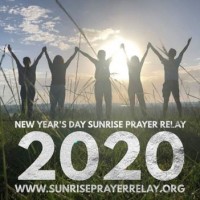
Australia Calls the World to Pray for the Nations
Australia Christian prayer leaders invite their brothers and sisters in Christ, prayer groups, prayer networks and churches to join with them all over the world to pray at sunrise on New Year's Day 2020 at a public location such as a hill, lookout or landmark in your city or town.
This year our focus is to pray for the nations. Over the last two years we had registrations from 50 different countries including USA, South Africa, Namibia, Pakistan, Japan, United Kingdom, Fiji, Vanuatu, New Zealand, and Australia.
Warwick Marsh, coordinator for Australia’s National Day of Prayer & Fasting said, “David said in Psalm 108:2, “I will wake the dawn with my song.” During this time of prayer, we want to focus on giving great praise to God. We also want to pray for revival and transformation, that God will bring healing to each of our nations: 2 Chronicles 7:14. Let us all pray for a great harvest of souls for the Lord Jesus Christ.”
Marsh continued, “In declaring Jesus Christ as Lord at this worldwide Sunrise Prayer Relay we are circling the globe with prayer, praise and worship and surrendering our lives to Jesus Christ for the glory of God. Psalms 113:3 says, “From the rising of the sun to the place where it sets, the name of the Lord is to be praised.” This year we want to challenge people to pray for the nations. Use the prayer resources on the website and social media and register your location at: www.sunriseprayerrelay.org
Our prayer is that with your help, this worldwide Prayer and Praise Relay will go viral.”
Pat Steele, a prayer & evangelist leader in Wollongong Australia, said, “We encourage you to pray the Lord's Prayer together aloud as the sun rises and make a declaration that Jesus Christ is Lord of your life, your family, your region and your nation. Let’s also join to pray for the nations.
At your location we encourage you to include praise and worship, prayers, and scripture readings. We suggest 30 minutes, but you can pray for longer. You could even take communion, shine a torch, or light a candle. What you do for your sunrise celebration is up to you.”
Share photos and videos from your location on social media.
Use the hashtag: #sunriseprayerrelay
Website: www.sunriseprayerelay.org
Facebook: www.facebook.com/sunriseprayerrelay
Instagram: www.instagram.com/sunriseprayerrelay
YouTube: www.youtube.com/watch?v=LSTHRAixKOQ
Contact: Warwick Marsh 61 418 225212 or Pat Steele by email: This email address is being protected from spambots. You need JavaScript enabled to view it.
Finishing the Task Conference 3-5 December 2019
http://finishingthetask.org/ Sunrise Prayer Relay 1st Jan 2020
40 Days of Prayer for 2020 – Preparing Hearts
https://drive.google.com/file/d/1EksUzKPVPfkKg8Ki2bLnDaeaCqFa3UZC/view
5 Days of Prayer for the Khawlan People of Saudi Arabia and Yemen – 14th-18th Feb 2020
https://www.pray-ap.info/focus.html
Seek God for the City Feb 26–Apr 5, 2020
https://waymakers.org/pray/seek-god/
Go 2020 – Reaching 1 Billion for Christ - May 2020
One God - One Day - One Africa – 31st May 2020
 UPRising Events Calendar
UPRising Australia - July 14-18, 2020 - Sydney, Australia
UPRising New England - November 19-21, 2020 - New England, USA
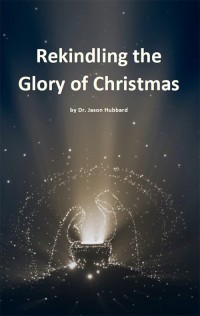
Dr Jason Hubbard, IPC’s Executive Co-ordinator has written this short devotional booklet which takes us through the greatest love story of all time, when God’s own Son shed his garments of glory to become Bethlehem’s lamb.
It’s a 39 page booklet that will bring a fresh perspective on the Christmas Story and enrich, challenge and teach us more about the significance of the feasts, the history and the message of Hope for all mankind that Jesus brought.
It’s a compelling read.
Download ‘Re-kindling the Glory of Christmas Devotional’ HERE
Ghana: a step towards ending slavery
Thousands of children aged between three and seventeen live in slavery on Lake Volta, working up to 18 hours a day in the fishing industry. They are paid in daily abuse and threats, and the only way out is to drown or be rescued. Praise God for two convictions when the accused men pleaded guilty to human trafficking. One of them, who used the children for labour on his fishing boat, must also pay a fine or spend an additional year to the five-year sentence if unable to pay. While IJM has previously seen convictions for child labour in Ghana, these are their first for human trafficking, and a significant step toward ending slavery in the fishing industry.
Advent prayer resource
SAT-7 constantly receive testimonies of people whose lives are being transformed by Jesus. Some grew up in Christian homes, others first met with Jesus through their television screens. Some had a chance encounter with a Christian and wanted to find out more, others first discovered His joy through picking up a Bible in their own language. SAT-7 have just produced a prayer guide to give us a glimpse into some of their stories. Over the course of Advent they will take people on a journey across the Middle East and North Africa, through the 25 countries where they work, visiting a different country each day, and discovering plenty of reasons to rejoice – as well as ideas for prayer requests.